
A termite report can turn a straightforward home sale into a difficult financial decision. You may have noticed a few damaged boards around a window, only to learn that the problem extends into the framing. Or perhaps a buyer has requested treatment and repairs you cannot afford before closing.
You can sell a house with termite damage in Bradenton, FL, without necessarily treating the infestation or repairing the damage first. The transaction must comply with Florida disclosure law, your purchase agreement, and any financing or other requirements affecting the sale.
Before hiring a pest control company or accepting a reduced offer, determine what the insects have damaged, whether they remain active, and how much money each selling option could leave you with.
Can You Sell a House With Active Termites in Florida?
Florida does not generally prohibit the sale of a home with termites. An informed buyer may agree to purchase the property and undertake treatment and repairs afterward.
The distinction is between a property that can legally be sold and one that qualifies for a particular buyer’s mortgage. A house with extensive wood damage may be difficult to finance even when a buyer is willing to accept its condition.
You can market the house as-is, treat it before listing, or negotiate specific repairs with a prospective buyer. If you already have a signed contract, its terms determine what you must do next. You cannot unilaterally replace those obligations with an as-is arrangement.
Why Bradenton Homes Are Vulnerable to Termite Damage
Florida’s warm climate favors termite activity. Around Bradenton, the construction details of an individual home often matter more than its neighborhood or age alone.
An older house near downtown may have a raised wooden floor with a crawl space. A concrete-block ranch in West Bradenton might instead have vulnerable roof trusses, wooden furring strips, door frames, or a later addition. In either case, much of the damage can be concealed behind finishes.
Landscaping against exterior walls, moisture from irrigation, leaking plumbing, and wooden materials in contact with soil can complicate an inspection. Ask the inspector to examine accessible areas around additions and enclosed lanais, especially where the construction method changes.
The Florida Department of Agriculture and Consumer Services (FDACS) identifies several termite groups. Two deserve particular attention in a home sale.
Drywood Termites
Drywood termites live within wood without requiring contact with the ground. Their activity may be detected through pellet-like droppings around window sills, furniture, or other wooden components. Treatment may range from localized work to structural fumigation, depending on the professional assessment.
Subterranean Termites
Subterranean termites commonly reach structures from the soil. Concealed entry points, foundation penetrations, and moisture conditions can make infestations difficult to identify. Treatment may involve soil barriers or bait systems. The FDACS subterranean termite guide explains prevention and treatment considerations.
Active Termite Infestation vs. Previous Termite Damage
A house can have substantial historical damage even after successful extermination. Conversely, active termites do not always mean that major structural reconstruction is necessary.
| Inspection finding | Potential impact on selling |
|---|---|
| Active termites, limited damage | Treatment may make the home easier to market |
| Previous treatment, minor damage | Records may reduce buyer uncertainty |
| Historical structural damage | Repairs or an engineering assessment may be necessary |
| Active infestation and structural damage | Both treatment and reconstruction may be needed |
| Concealed or inaccessible areas | Buyers may price in uncertainty |
Do not confuse a pest control invoice with proof that damaged wood has been restored. Treatment and structural repairs solve different problems, and each deserves its own estimate.
Signs of Termite Damage That Can Affect a Home Sale
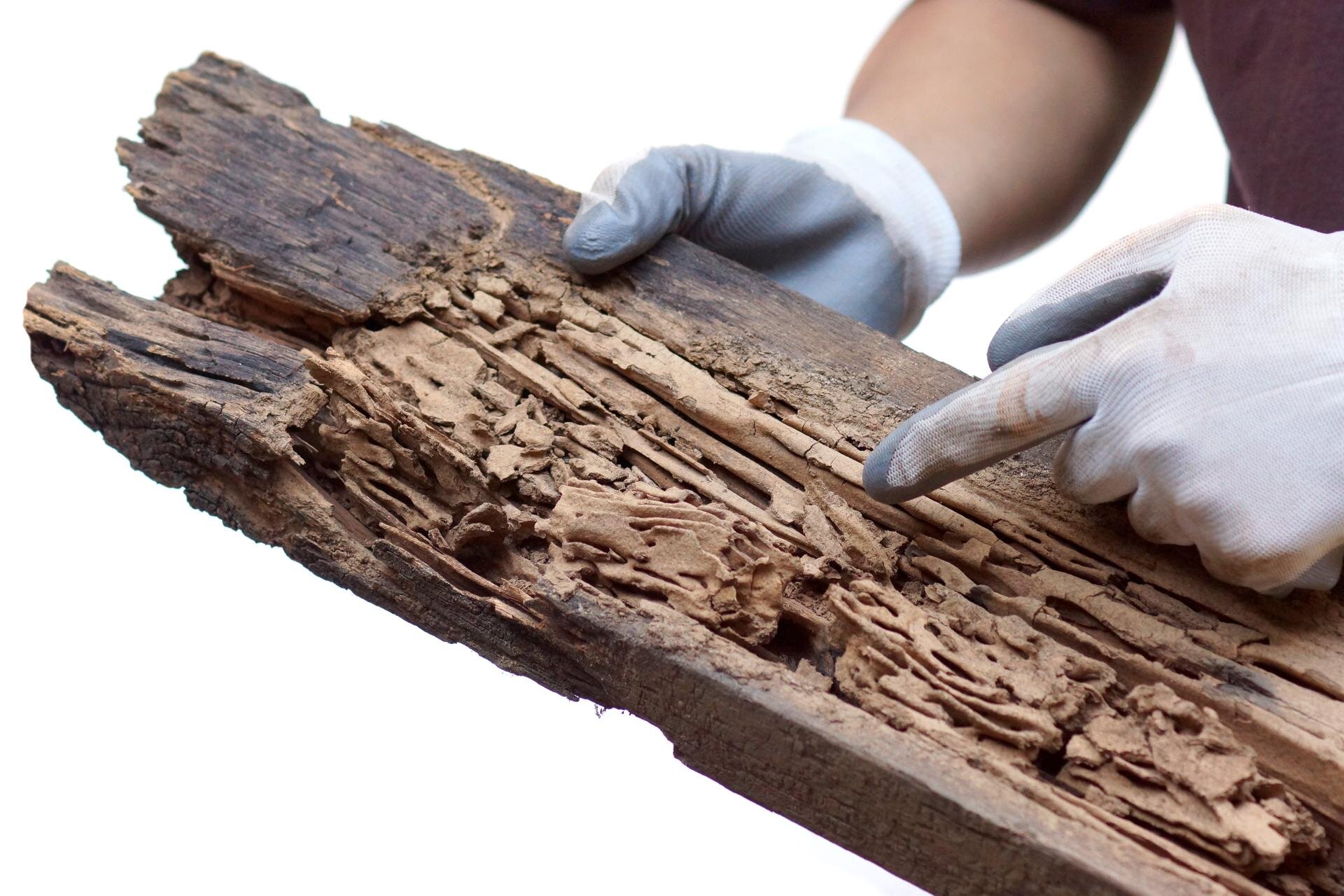
Discarded wings, shelter tubes, pellet-like droppings, blistered finishes, and hollow or weakened wood can justify further investigation. Sagging floors or distorted framing are more concerning because they may indicate compromised structural components. These observations alone do not establish whether termites remain active or caused every defect. Avoid disturbing suspect structural materials, and arrange an appropriate professional assessment before deciding on repairs.
What Is a WDO Inspection in Florida?
A Wood-Destroying Organism (WDO) inspection evaluates visible and accessible evidence of organisms that damage wood, including termites, certain beetles, and wood-decaying fungi. It is not the same as a general home inspection or a structural engineering report.
Under Florida Statutes § 482.226, a qualified pest-control licensee performing a real estate WDO inspection must provide the prescribed report when charging for the inspection or when the customer requests a written report.
The official FDACS Form 13645 separates findings into live organisms, other evidence, and observed damage. It also identifies limitations and inaccessible areas. Pay particular attention to spaces the inspector could not examine. A finished ceiling or covered wall may conceal deterioration that cannot be evaluated visually.
Is a Termite Inspection Required Before Selling in Florida?
There is no universal state requirement that every residential seller obtain a WDO inspection. The statute governs reporting when qualifying inspections take place. Your purchase agreement or the buyer’s mortgage program may nevertheless require one. Establish who will arrange and pay for the inspection, and when it must be completed, before agreeing to a closing date.
If a report flags potentially weakened framing, ask a qualified building professional to determine whether further investigation is needed. Our foundation problems guide explains why different structural symptoms may require different specialists.
Do You Have to Disclose Termite Damage When Selling in Florida?
Florida’s residential seller disclosure standard comes from the Supreme Court decision in Johnson v. Davis. Sellers must disclose facts they know that materially affect property value when those facts are neither readily observable nor known to the buyer.
For a termite-damaged property, that can include a known active infestation, concealed unrepaired damage, recurring activity after treatment, or material findings in previous inspection reports.
Suppose you had a section of wall treated several years ago but never replaced the damaged framing. Telling buyers only that the house was treated may omit information important to their decision. Give an accurate description of both the treatment and the unresolved damage.
Provide relevant reports, invoices, photographs, and warranties. If records are incomplete, say so rather than claiming the entire problem has been resolved.
Does Selling As-Is Remove Disclosure Obligations?
No. An as-is contract can allocate repair responsibilities, but it does not excuse actionable concealment or misrepresentation. The same disclosure principles apply when selling directly to a cash buyer. If you discover additional material damage after completing a disclosure form, discuss how to update the buyer promptly with your agent or Florida attorney.
What If Termite Damage Is Discovered After Signing a Purchase Agreement?
An unfavorable WDO report does not automatically cancel a sale. Some agreements contain separate pest inspection provisions, repair limits, or deadlines for submitting notices. Others give buyers broader inspection rights.
First, obtain the report and identify exactly what the buyer is requesting. Is treatment enough, or is there evidence of structural deterioration? Ask for estimates supporting any requested concession.
Next, review the signed contract with your agent or attorney. Confirm the inspection deadline, whether notice was properly delivered, and which party has agreed to pay for treatment or repairs. Document any changes to price, repair scope, or timing in a signed amendment.
A seller credit may resolve a negotiated expense but cannot necessarily replace work required by a lender. Do not promise that the buyer can complete repairs after closing until the lender confirms that arrangement is acceptable.
For broader contract and inspection issues, read our failed home inspection guide. If the original sale ends, our Bradenton buyer cancellation guide explains the next steps. Resolve the first agreement before committing to another sale.
Can Buyers Get Financing for a Termite-Damaged House?
The condition of the building matters independently of the buyer’s financial qualifications. A preapproved buyer can still encounter a property-related lending obstacle.
Conventional Financing
Under Fannie Mae’s property condition guidance, minor deficiencies can sometimes be reflected in an as-is appraisal. Suspected infestation or structural concerns may require further evaluation. The lender must determine whether the property meets its condition requirements and whether repairs must be completed.
FHA Financing
FHA property standards address safety and structural soundness. When an appraisal requires a pest specialist’s inspection, the lender must obtain the inspection and evidence of any required treatment. Necessary structural repairs can also become conditions of approval. See HUD’s FHA Single Family Housing Policy Handbook.
VA Financing
Florida is listed in the VA’s local wood-destroying insect inspection requirements. A typical VA-financed house purchase in Bradenton should therefore be evaluated against the applicable inspection and property standards. The lender can confirm requirements for the particular property, including how identified infestation or damage must be addressed.
Cash purchases avoid these mortgage approval conditions. Buyers can still require their own evaluation, negotiate a different price, or decline a property when the structural risk is too great.
How Much Does Termite Damage Reduce a House’s Value?
There is no reliable universal percentage. Repaired market value, remaining damage, treatment history, and uncertainty about concealed components all influence the price.
A $3,000 extermination estimate does not tell you what the house will be worth after treatment. If the affected wood supports a roof or floor, you also need to understand the reconstruction scope.
Ask whether a repair estimate includes demolition, removal of affected materials, engineering, permits, replacement framing, and restoration of finishes. A bid that covers new joists but excludes flooring and drywall may substantially underestimate the total expense.
In Bradenton, a buyer may also consider taxes, insurance, utilities, and contractor availability during renovation. An investor’s offer ordinarily reflects those expenses and resale risk, not merely the cost of killing termites.
Should You Treat and Repair Termite Damage Before Selling?
Treatment may be a worthwhile investment when the infestation is limited and a modest repair would allow more financed buyers to compete for the home. If the work is extensive, compare a realistic repaired sale with an as-is sale before using savings or taking on new debt.
The following examples illustrate why the best choice can change with the severity of damage.
Example 1: Limited Damage That Is Affordable to Repair
Assume a homeowner receives a treatment estimate and a separate quote for minor wood replacement.
| Financial item | Amount |
|---|---|
| Expected repaired sale price | $365,000 |
| Professional termite treatment | −$3,200 |
| Wood replacement | −$5,800 |
| Selling and closing expenses | −$23,000 |
| Additional holding expenses | −$2,500 |
| Estimated net before mortgage payoff | $330,500 |
An alternative as-is offer of $315,000 with $2,000 in seller expenses would leave $313,000. Repairing could yield $17,500 more if the price and cost assumptions hold. The homeowner must still be able to fund the work before closing.
Example 2: Extensive Damage to Structural Framing
An inherited home requires repairs to weakened joists and wall framing. The owners live elsewhere and must supervise contractors remotely.
| Financial item | Repair and list | Direct as-is sale |
|---|---|---|
| Expected sale price | $410,000 | $325,000 |
| Termite treatment | $4,500 | $0 |
| Structural repairs | $42,000 | $0 |
| Repair contingency | $8,000 | $0 |
| Selling and closing expenses | $27,000 | $2,000 |
| Additional holding expenses | $6,000 | $0 |
| Estimated net before mortgage payoff | $322,500 | $323,000 |
The $85,000 difference in sale price is almost entirely absorbed by the assumed renovation and selling costs. The direct sale leaves $500 more under these assumptions, without the owners funding reconstruction. A higher repaired sale price or lower repair bill could reverse that result.
These figures are hypothetical, not Bradenton market averages, contractor quotes, or company offers. Mortgage payoffs, liens, tax adjustments, and other transaction-specific expenses are excluded.
Does Homeowners Insurance or a Termite Bond Cover the Damage?
Standard homeowners insurance generally excludes termite damage, as explained by the Florida Office of the Insurance Consumer Advocate. Review your particular policy rather than assuming that recently discovered damage will be covered.
A termite bond is different. It is a pest-control service or protection contract, not a substitute for homeowners insurance. A retreatment-only agreement may provide additional treatment without funding replacement of damaged wood. A repair-and-retreatment agreement may provide broader protection, subject to its limits and exclusions.
Florida’s pest-control contract rule, 5E-14.105, addresses contract terms, covered termite types, and treatment obligations. Ask the provider whether your agreement is current, whether a claim is available, and whether coverage transfers to the buyer. Obtain confirmation in writing before advertising a transferable bond.
How to Sell a Termite-Damaged House in Bradenton: Six Steps
1. Identify the infestation and preserve the report
Ask a licensed pest-control business to identify the organisms and document visible evidence. Keep photographs and records from previous treatments. Avoid concealing damaged areas or replacing finishes merely to improve appearances before an inspection.
2. Separate pest treatment from structural work
Get independent scopes for extermination and reconstruction. If there is uncertainty about load-bearing components, seek appropriate engineering advice. Do not enter areas suspected to be unsafe. Our as-is home selling guide offers additional considerations for properties needing extensive improvements.
3. Confirm permits and the property’s jurisdiction
Structural reconstruction may require permits. A Bradenton postal address does not necessarily mean the parcel is inside city limits. Check with the City of Bradenton Building and Permitting Division or Manatee County’s permitting office, as appropriate.
Ask whether previous structural work was permitted, whether inspections remain outstanding, and what approvals the proposed repairs require. Replacing a damaged decorative trim board is not equivalent to replacing a load-bearing wall.
4. Prepare a clear disclosure package
Organize the WDO report, treatment history, termite bond, repair estimates, and any permit documents. Mark which repairs are complete and which remain outstanding. Share the relevant records with prospective buyers so they can price the actual condition instead of guessing.
5. Compare realistic offers
Compare the amount a buyer proposes to pay with the expenses you would incur under that offer. Consider inspection contingencies, repair demands, proof of funds, and existing brokerage obligations. Use our fair cash offer guide to help assess the terms.
6. Agree on responsibilities before closing
Confirm in writing who handles treatment, repairs, permits, and agreed closing costs. If work will occur after closing, make sure the arrangement is consistent with the contract and financing. A title company or attorney can coordinate mortgage payoffs and other settlement obligations.
Listing vs. Selling a Termite-Damaged House for Cash
Listing after treatment may make sense when the necessary work is affordable and likely to expand your buyer pool. Listing as-is is also possible if the condition is disclosed and the agent markets to suitable buyers.
A direct cash sale may suit owners who lack repair funds, cannot manage fumigation or reconstruction, or have already experienced a financing-related cancellation. The trade-off is that a direct buyer may offer less than the repaired retail value to account for its expenses and risk.
Our comparison of listing and direct selling explains the differences in commissions, repairs, financing, and closing arrangements. Neither route guarantees a particular net amount or closing date.
How Florida Home Buyers Helps Owners of Termite-Damaged Houses
Florida Home Buyers has served Sarasota and Manatee counties since 2002. We evaluate eligible houses in Bradenton in their existing condition, including properties with known termite activity or unrepaired damage.
If you already have a WDO report or contractor estimate, it can help us understand what you are facing. You do not have to purchase fumigation or begin reconstruction simply to request an offer.
We explain the proposed purchase terms, including the agreed closing expenses, and coordinate accepted purchases through a local title company. There are no agent commissions on our direct purchase, subject to any separate brokerage obligations you may have. See how our home-buying process works or check our Manatee County service area.
Frequently Asked Questions
Can I sell a house with termite damage in Bradenton, FL?
Yes. A buyer can purchase a termite-damaged house as-is when the property’s condition is properly disclosed and the transaction meets its legal and contractual requirements.
Do I have to treat termites before selling a house in Florida?
Not always. Treatment may be required by your contract or the buyer’s financing, but an informed as-is buyer may accept an untreated property.
Must I disclose previous termite damage to buyers?
Disclose known facts materially affecting value that are not readily observable and are unknown to the buyer. Significant unrepaired historical termite damage can qualify.
Can I sell a house after an unfavorable WDO inspection?
Yes. Depending on the contract, you may negotiate treatment, repairs, or a price adjustment, or seek another buyer after resolving the original agreement.
Does termite treatment repair damaged wood?
No. Pest treatment addresses infestation. Damaged wood may need separate replacement or reinforcement by qualified building professionals.
Can a buyer obtain FHA or VA financing on a termite-damaged house?
Possibly. The property must meet the applicable mortgage standards, which may require inspections, treatment, and repairs before closing.
How much value does termite damage take off a house?
There is no fixed percentage. The impact depends on the severity, repair costs, treatment history, concealed damage risk, and local market value.
Does homeowners insurance cover termite damage in Florida?
Generally not. Check your policy and any separate termite protection contract to understand available coverage and exclusions.
Can I transfer my termite bond to a new owner?
Possibly. Ask the provider about transfer eligibility, renewal status, fees, inspections, and the extent of treatment or repair coverage.
Do cash home buyers purchase termite-damaged houses in Bradenton?
Yes. Florida Home Buyers considers eligible properties as-is, subject to its evaluation, title clearance, and agreed purchase terms.
Find Out What Your Bradenton House Could Sell For As-Is
You do not need to decide on a costly termite repair project before learning what your house might sell for today. Get the facts about the damage, compare your likely net proceeds, and choose the option that fits your finances.
Call Florida Home Buyers at (941) 927-0040 or request a no-obligation cash offer.
Disclaimer: This article is educational, not legal, financial, engineering, insurance, or pest-control advice. Consult qualified professionals about your property’s condition and obligations. Financial examples are hypothetical.