
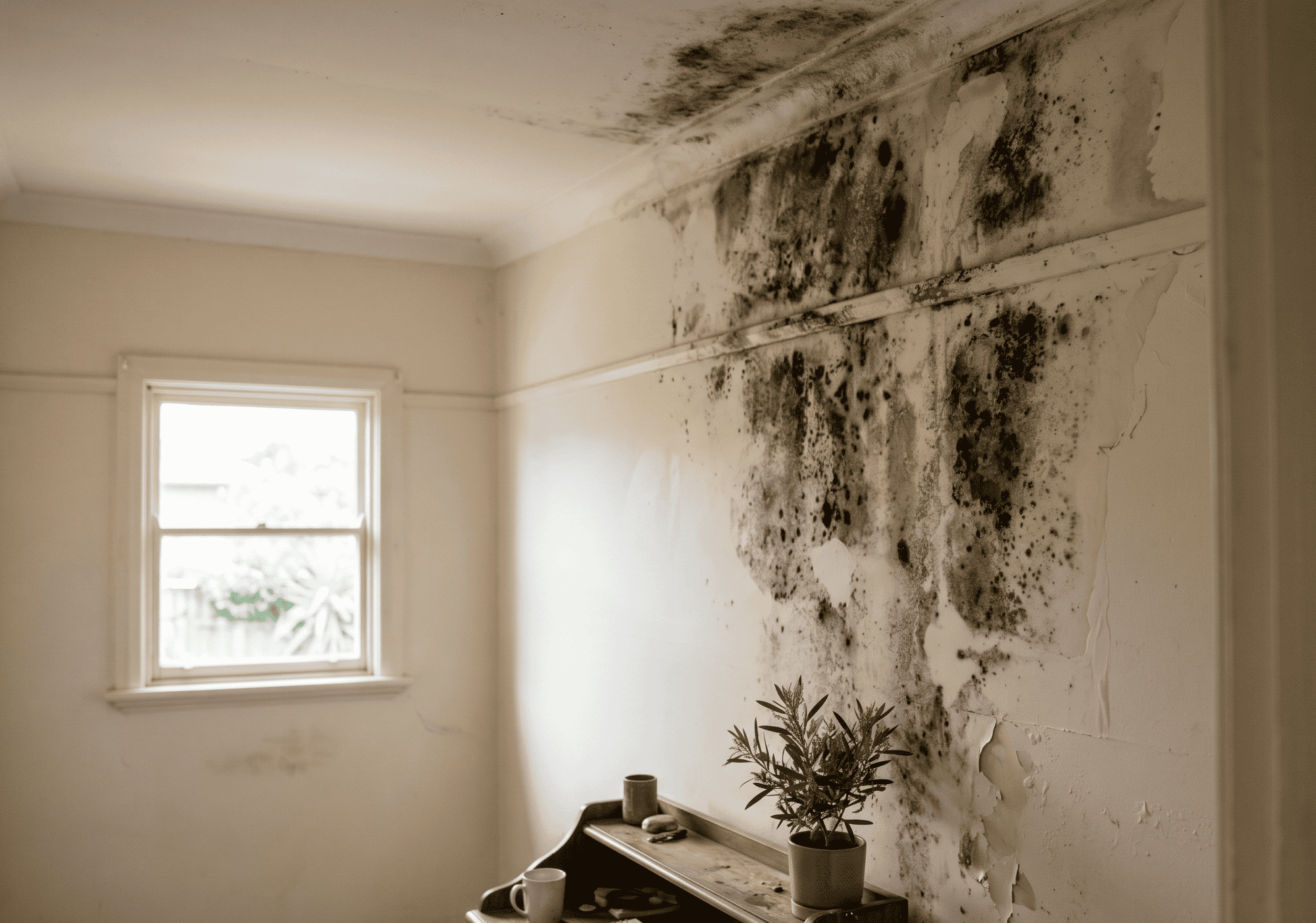
A buyer notices dark staining behind a laundry-room cabinet. Another mentions a musty smell near the air handler. You may have lived with the problem for months, or discovered it while preparing to sell. Either way, the immediate question is practical: Can you sell a house with mold in Bradenton without paying for all the repairs first?
Often, yes. A Florida homeowner can generally offer a property in its current condition, provided the sale complies with disclosure requirements and the buyer accepts the risks and contract terms. The difficult part is determining how much moisture damage exists, whether it is still getting worse, and which selling option leaves you with the best realistic outcome.
This Bradenton-focused guide explains assessment, Florida law, and the financial tradeoffs between remediation, an as-is listing, and a direct purchase.
Can You Sell a House With Mold in Bradenton, Florida?
Yes. Mold does not automatically make a residential property legally unsellable in Florida. But an as-is agreement does not eliminate a seller’s obligation to disclose qualifying known defects. Buyers may also have inspections, insurance requirements, and mortgage conditions that influence whether a transaction closes.
The extent matters. A small patch caused by a recently repaired sink leak is not the same as wet insulation and deteriorated drywall throughout several rooms. A continuing roof leak can matter more than the staining.
Before choosing a sale price or signing a repair agreement, establish three facts: where the moisture came from, what materials are affected, and who will be responsible for remaining work after closing.
Why Mold Appears in Bradenton Homes
Manatee County’s warm, humid conditions give moisture problems plenty of opportunities to linger. In Bradenton homes, potential sources include air-conditioning condensate lines, poorly ventilated bathrooms, roof or window leaks, plumbing failures, and water entering during heavy rain.
Even block-walled houses can develop mold on drywall, insulation, trim, and cabinets. In a vacant house, a disabled or poorly functioning cooling system can allow humidity to rise before the next showing. That makes checking the air-conditioning system and indoor moisture conditions worthwhile even when the house looks clean during a brief walkthrough. If the HVAC system itself may be contaminated with mold, the EPA advises against operating it until the concern has been evaluated because it could spread contamination through the home.
The Florida Department of Health’s mold guidance emphasizes that controlling moisture is essential. Cleaning a stain without correcting the leak or humidity problem often leaves the conditions for growth in place.
Floodwater damage can differ substantially from an isolated plumbing leak; check the property’s history.
What Should You Do When You Discover Mold Before Selling?
Start by documenting the condition without disturbing potentially contaminated materials. Take dated photographs of visible staining and water damage, note odors or recurring dampness, and collect relevant plumbing, roofing, HVAC, or insurance records.
Address ongoing leaks promptly and safely, rather than waiting for a buyer’s inspection. The EPA’s homeowner mold guide recommends drying water-damaged materials within 24–48 hours where possible and removing mold while correcting the water problem.
Avoid pulling apart extensive damaged walls yourself, especially where electrical hazards, sewage, or extensive contamination might be present. If occupants have asthma, severe allergies, or weakened immunity, consider medical advice before attempting cleanup. Qualified contractors can determine safe access and handling. You can negotiate responsibility for restoration later.
Documenting a problem is not the same as promising to repair it. Clear records make an informed as-is sale easier to evaluate.
Is Mold Testing Necessary Before Listing?
Not every visible patch requires an expensive laboratory test. Florida’s Department of Health states that visible growth or a persistent musty odor often identifies a problem without sampling. It also notes there are no health-based indoor mold standards for interpreting routine sampling results.
That does not mean professional evaluation lacks value. If a buyer questions whether moisture extends behind cabinets, inside walls, or near the HVAC system, an experienced assessor may help define the suspected source and affected materials. Specific circumstances, including disputes or unusual contamination, may warrant additional investigation.
Do not market a house as “mold-free” because one sample showed a low count. Mold spores are naturally present in the environment. Similarly, dark-colored growth is not proof of a particular species or a unique toxicity level. The objective is to understand the moisture and building-condition problem, not chase a dramatic label.
Florida Mold Assessment and Remediation Licensing Rules
Florida regulates professional mold-related services through the Department of Business and Professional Regulation (DBPR). Under Florida Statutes §468.8411, regulated mold assessment and remediation definitions involve growth affecting more than 10 square feet, with licensing requirements and exemptions explained in DBPR’s licensing guidance.
Under Florida Statutes §468.841, residential property owners are exempt from the state’s mold-assessment and mold-remediation licensing requirements when performing those services on their own property. However, significant or concealed contamination may still require professional expertise, and separately regulated construction work remains subject to its applicable licensing requirements. Plumbing, electrical, structural, or other construction work may require separately qualified contractors even when mold remediation is involved.
There is another safeguard worth knowing. Section 468.8419 generally restricts mold assessors and their companies from performing remediation on a structure they assessed during the preceding 12 months, with statutory exceptions. Related restrictions apply in the opposite direction. This helps address conflicts of interest.
Ask who is assessing the problem, who proposes the cleanup, whether their licenses are current, and how completion will be documented. Check the individual professional’s credentials through Florida DBPR’s mold-related services information.
Surface Mold vs. Hidden Water Damage: What Sellers Should Know
The EPA’s mold cleanup guidance says homeowners can often handle small affected areas under about 10 square feet when the circumstances are appropriate. That is a practical cleanup guideline, not a declaration that the underlying building is sound or that every job below the threshold is risk-free.
A much larger project may involve removing porous drywall, insulation, carpet padding, or cabinetry, repairing a water source, drying framing, and reconstructing finished surfaces. Contaminated water and HVAC-system involvement can require additional precautions.
When comparing contractor estimates, ask whether they cover containment, removal, disposal, moisture correction, rebuilding, and any independent verification. A proposal omitting source repairs is not a complete scope.
How Much Could Mold Remediation Cost Before a Sale?
There is no responsible single price for every Bradenton home. A small localized cleanup may be relatively straightforward, while concealed damage across multiple rooms can change substantially once materials are opened.
The estimate depends on the affected area, how far moisture traveled, building access, contaminated materials, drying needs, the original leak, and the amount of reconstruction. Even after visible mold is addressed, replacement cabinets, drywall, or flooring may be separate expenses.
Request a written scope with clear exclusions rather than accepting an unexplained lump sum. If repairs are optional under the intended sale contract, use the quote to compare offers—not automatically as money you must spend.
For a broader look at selling without major renovations, see Florida Home Buyers’ guide to selling a house as-is with costly repairs.
Must You Disclose Mold When Selling in Florida?
Florida’s disclosure rule is based on known material facts, not whether a seller calls the property “as-is.” In Johnson v. Davis, the Florida Supreme Court established a duty to disclose facts known to the seller that materially affect residential property value when they are not readily observable and not already known to the buyer.
Mold associated with concealed water damage, recurring leaks, or significant building deterioration may meet that standard. Florida Realtors’ disclosure guidance confirms that an as-is sale does not eliminate this duty.
Tell buyers what you actually know: where growth or water intrusion was observed, repairs performed, whether the source is resolved, and which reports exist. Do not present a suspicion as a laboratory-confirmed diagnosis; likewise, do not paint over staining and imply the problem never existed.
Use written disclosures and keep supporting records. If a prior owner or contractor gave conflicting information, ask a Florida real estate attorney how to describe the uncertainty accurately.
What If the Mold Followed Flooding or a Storm?
Mold after stormwater intrusion introduces a second issue: flood history is not the same as an ordinary indoor humidity problem. In Florida, Statute §689.302 requires a prescribed flood disclosure to the residential purchaser at or before execution of the sale contract. It asks about specified flood damage, related claims, and assistance.
For Bradenton properties, Manatee County’s flood-risk resources can help owners and buyers research a particular parcel. Flood-zone designation alone does not prove that a specific house flooded.
If contaminated water entered the home, professional cleanup may require different precautions than a minor condensate leak. For additional discussion of widespread water intrusion, the company’s North Port flood-damage article explains related selling considerations, though the jurisdiction and facts will differ.
Will Homeowners Insurance Pay for Mold Removal?
Do not assume it will—or that every claim is excluded. Coverage depends on the policy language, the source of water, applicable exclusions, limits, and endorsements. A sudden covered plumbing incident may be treated differently from long-term leakage, deferred maintenance, or floodwater.
Florida’s Office of Insurance Regulation explains common policy forms and coverage limitations. The state’s insurance consumer advocate describes optional mold endorsements that can change available limits.
Report a potentially covered loss promptly under your policy requirements, preserve evidence, and ask the insurer for its position in writing. A claim payment is not guaranteed, and waiting for an insurance dispute to finish may not fit your intended selling schedule.
Will Mold Prevent a Buyer From Getting a Mortgage?
Not automatically. A buyer’s financing problems depend on the severity and documentation of the condition, appraisal requirements, loan program, and available homeowners insurance. An appraiser may flag apparent moisture damage, and a lender or insurer may require corrective work before closing.
A seller credit cannot always replace repairs if the lender or insurance underwriter needs the underlying condition corrected. Buyers using cash do not have mortgage underwriting, but they still may demand inspections, price adjustments, or repairs under their contracts.
If a buyer has objected to mold, our guide to selling after a failed home inspection in Sarasota covers the contract and negotiation side of that problem.
Three Practical Ways to Sell a Bradenton House With Mold
Option 1: Remediate, Document the Work, Then List
This may suit a homeowner with sufficient funds and a manageable scope. Correct the water source, hire properly qualified professionals where needed, and obtain documentation describing work performed and remaining limitations. An independent review may help when the buyer or lender requests it.
A wider buyer pool is possible, but so are upfront costs, concealed damage, and delays. Compare expected net proceeds rather than assuming all remediation costs will be recovered in the price.
Option 2: List As-Is and Disclose the Condition
An agent may market the home with clear disclosures, photographs, relevant reports, and pricing that reflects the expected work. Buyers may assess the moisture risk and financing feasibility differently.
The contract should identify whether the seller must make repairs, what inspections the buyer may conduct, and which contingencies apply. Confirm that the buyer’s lender permits any repair credit.
Option 3: Consider a Direct Purchase in Current Condition
A direct buyer may evaluate a home with documented mold and consider purchasing without requiring the seller to arrange full remediation. The proposed offer generally reflects condition, estimated work, resale risk, and the buyer’s expenses.
This is not a guaranteed purchase or price. Ask whether inspection rights, potential repricing, municipal requirements, closing costs, or title issues remain. Florida Home Buyers describes its home-buying process and direct selling option. Review a written offer alongside an agent’s realistic net sheet.
Bradenton Example: Remediate Before Listing or Sell As-Is?
Consider a hypothetical three-bedroom home in west Bradenton. The owner discovers staining around an air-handler closet after a condensate drain backup. A specialist suspects moisture behind adjacent drywall, and the owner has not yet determined whether cabinetry needs replacement. An agent and a direct buyer provide separate preliminary scenarios.
| Illustrative calculation | Repair and list | List as-is | Direct purchase |
|---|---|---|---|
| Assumed sale price | $385,000 | $343,000 | $313,000 |
| Moisture-source repair | $4,800 | $0 | $0 |
| Remediation and restoration | $16,200 | $0 | $0 |
| Selling and holding expenses | $28,000 | $25,000 | $4,000 |
| Estimated net before debts | $336,000 | $318,000 | $309,000 |
Invented figures for comparison only—not Bradenton market averages, actual contractor estimates, guaranteed sale prices, or a Florida Home Buyers offer. Seller expenses are assumed separately for each route; the $4,000 direct-sale amount is not a company fee. The example excludes mortgage payoff, taxes, liens, claim proceeds, unforeseen work, and other obligations. All scenarios assume a lawful transaction and a buyer willing and able to close on the stated terms.
The repaired listing yields the most money in this illustration, but requires $21,000 of upfront work and carries the risk of further discoveries. The direct sale has lower estimated proceeds but less seller-managed restoration. Actual quotes, the buyer’s ability to close, and your available cash determine which option fits.
Do Mold Repairs Require Permits in Bradenton?
Some mold cleanup consists of cleaning and material removal. Other projects involve substantial electrical, plumbing, structural, roofing, or reconstruction work. Whether permits are needed depends on the scope and the property’s jurisdiction.
A Bradenton mailing address does not necessarily mean the home is within City of Bradenton limits. Review the City’s Building and Permitting Division for city properties and Manatee County’s permitting services for unincorporated properties. Ask the relevant office before starting regulated construction.
If a previous repair was never finaled, share that record rather than treating a remediation invoice as proof of building approval.
How to Present a Mold-Affected Home to Buyers
Good documentation is more persuasive than vague assurances. Prepare a small property file containing photos, relevant inspection findings, contractor quotes, moisture-source repair records, insurance correspondence, and any permits.
Be specific about what remains unresolved. Instead of advertising “fully remediated,” describe completed work only when records support that claim. For an as-is listing, an agent can explain that the price reflects condition and that qualified buyers should verify repair scope during their due diligence.
Avoid using an unverified “black mold” label simply because a stain is dark. Similarly, do not describe a house as safe or medically risk-free based on an ordinary visual check. Clear facts help buyers make decisions without creating promises you cannot substantiate.
A Seller’s Checklist Before Accepting an Offer
- Identify moisture sources. Note leaks, condensation, stormwater, and recurring humidity.
- Record what is known. Save photographs, dates, prior repairs, and professional findings.
- Check credentials. Verify any required mold and trade licenses before hiring.
- Compare scopes. Separate removal, water-source repairs, rebuilding, and verification.
- Review disclosures. Explain known material problems and flood history where required.
- Test financing assumptions. Determine whether the proposed buyer can close with the existing condition.
- Calculate net proceeds. Include holding expenses, contingencies, and possible price concessions.
- Confirm responsibilities. Put remaining work and closing obligations in the purchase agreement.
You can review the company’s general home-selling FAQs while evaluating a direct offer.
How Florida Home Buyers Can Help Bradenton Sellers
If mold has been discovered behind drywall, around an air-conditioning system, or after a plumbing leak, Florida Home Buyers can discuss whether your Bradenton property qualifies for a direct purchase. You can share inspection findings, photographs, contractor estimates, and any known moisture-source repairs without first committing to a full remediation project.
If the company makes an offer, evaluate the price, contingencies, responsibilities for remaining work, and proposed closing arrangement in writing. Requesting information does not obligate you to sell. Learn more about the company and read homeowner testimonials before deciding.
Frequently Asked Questions About Selling a House With Mold in Bradenton, FL
Can I sell a house with mold in Bradenton, Florida?
Yes. A home with mold can generally be sold as-is if the buyer accepts the condition and the seller meets applicable disclosure and contract obligations.
Do I have to remove mold before selling my Florida house?
Not automatically. Repairs may still be needed to satisfy a particular buyer, lender, insurer, or agreed contract term.
Must I disclose past mold if it was repaired?
Disclose known material facts that are not readily observable or known to the buyer. Explain the previous moisture issue and repairs accurately when relevant.
Does selling as-is protect me from mold disclosure claims?
No. An as-is contract does not waive Florida’s duty to disclose qualifying known hidden defects.
Can a cash buyer purchase a house with mold?
Some can, depending on the property and the offer terms. Cash financing does not erase disclosure, title, or other legal requirements.
Is professional mold testing always necessary?
No. Visible growth usually does not require routine sampling, according to Florida health guidance. Complex or disputed conditions may justify professional evaluation.
Will homeowners insurance cover mold remediation?
Coverage depends on the water source, policy exclusions, limits, and endorsements. Ask your insurer to evaluate the specific event.
Can mold stop a mortgage-financed sale?
It can complicate a loan or insurance approval. Ask the lender and insurer whether repairs or documentation are required before closing.
How long does selling a mold-affected house take?
There is no fixed timeframe. Assessments, buyer due diligence, financing, permits, title work, and contract terms determine the schedule.
Compare Your Options Before Spending on Remediation
A mold problem should not force a rushed decision about a Bradenton home. Identify the moisture source, disclose material facts accurately, and compare the real costs of repairs with selling in the property’s present condition.
If you want to explore a direct purchase, call Florida Home Buyers at (941) 927-0040 or share your property details. You can review any proposal without an obligation to accept.
Disclaimer: This article provides general information, not medical, legal, insurance, construction, or financial advice. Requirements vary by property, contract, and policy. Consult qualified professionals about mold, disclosures, permits, and closing obligations.