
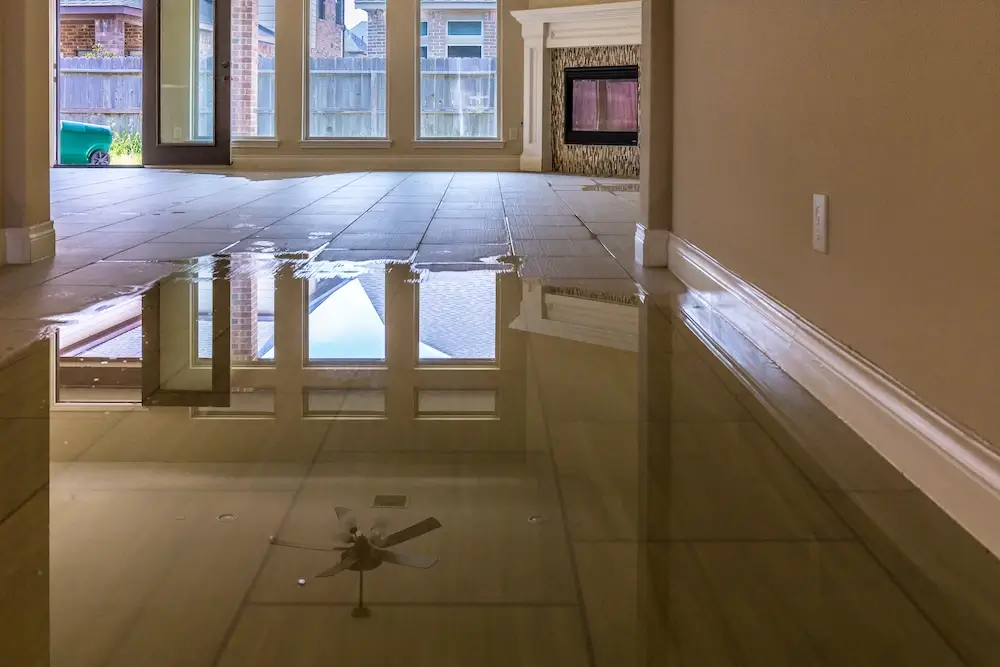
A flood can change your plans for a house overnight. Even after the water disappears, damp walls, damaged flooring, electrical problems, and insurance paperwork may remain. Perhaps you can afford repairs but no longer want to live there. Or the work required is more than your budget can handle.
If you need to sell a flood-damaged house in North Port, FL, repairing everything first is not your only option. You can restore the property and list it, offer it for sale in its current condition, or consider a direct purchase. The right choice depends on your actual repair costs, local building requirements, insurance coverage, and what you would receive after selling expenses.
This guide covers the North Port-specific questions worth answering before you commit to a contractor or sign a sale agreement.
Why Flood Damage in North Port Needs a Local Assessment
North Port flood exposure is not limited to beachfront properties. Heavy rainfall, overflowing waterways, and drainage conditions can affect inland neighborhoods, including areas near Myakkahatchee Creek, the Myakka River, and connected canals. Two homes on the same street can experience different damage because of elevation, construction, and the path of the water.
The City’s current FEMA flood map incorporates revised coastal flood-risk maps effective March 27, 2024. Changes affect certain areas near the creek and river, including portions of Wellen Park and Talon Bay. That does not mean every property in those communities is in the same flood zone.
Before comparing offers, distinguish three separate facts: where your house is mapped, whether water actually entered it, and what repairs are now required. Buyers, insurers, and building officials may consider each differently.
First, Make the Property Safe and Document What Happened
Do not enter a flooded structure until it is safe. Wet electrical equipment, weakened materials, contaminated water, and unstable flooring can create hazards that are not visible from the doorway. Follow official instructions and ask qualified professionals to assess utilities or structural concerns.
Once access is safe, take wide and close-up photographs showing the waterline, damaged rooms, appliances, flooring, cabinets, and exterior conditions. Keep contractor assessments, insurance letters, receipts, and photographs together. The National Flood Insurance Program’s damage-documentation guidance explains what to record before cleanup.
Address immediate hazards without committing to an entire renovation. Remove dangerous debris appropriately, protect the property against additional damage, and save documentation of emergency work. Do not retain contaminated items simply to show an adjuster; photograph them and follow insurer guidance about samples and disposal.
Moisture trapped behind drywall or under cabinets can lead to further deterioration. The EPA recommends drying water-damaged areas within 24–48 hours when possible. Significant contamination or hidden moisture may warrant professional remediation.
If the house has already been cleaned, do not assume the underlying damage has been resolved. A buyer’s inspector may still find elevated moisture, deteriorated subflooring, or electrical issues. Describe completed work accurately, retain invoices, and avoid calling a property “fully restored” without supporting evidence.
Can You Sell a Flood-Damaged House As-Is in North Port?
Yes. A North Port house can generally be sold as-is when a buyer accepts its condition and the transaction meets applicable legal, disclosure, title, and contractual requirements. “As-is” usually addresses who is expected to make repairs; it does not waive required disclosures or guarantee the buyer cannot inspect the property.
A conventional buyer may be unable to obtain financing for a home with severe safety or habitability issues. A renovation buyer or cash purchaser might evaluate those repairs as part of the offer instead. That difference affects the buyer pool and likely price.
If you want to understand the company’s approach before requesting an offer, review how Florida Home Buyers purchases houses. You can also compare the broader options for selling a house without first completing repairs.
Florida Flood Disclosure Rules Still Apply
Florida’s 2026 statute on residential flood disclosure, Section 689.302, requires sellers to provide the prescribed disclosure at or before the sales contract is executed. It asks whether, during ownership, the seller knows of flooding that damaged the property, filed a flood-damage insurance claim, or received assistance such as FEMA funding for flood damage.
This is not an optional step for an as-is sale. A repaired home may still have a flood history requiring disclosure. The statutory definition includes certain overflows of inland or tidal waters, rapid runoff from an established water source, and sustained standing water from rainfall.
Florida sellers may also have duties relating to other known material defects that are not readily observable. A buyer should receive truthful information about known problems such as prior water intrusion, unresolved mold, or unpermitted reconstruction. Ask a Florida real estate attorney about unusual circumstances rather than guessing what an “as-is” clause covers.
Check the Flood Zone, Elevation, and Property Records
Search your address on North Port’s interactive FEMA map. Zone AE generally identifies a higher-risk area with a mapped base flood elevation. Shaded Zone X identifies moderate mapped risk; unshaded Zone X generally indicates lower mapped risk. A home outside Zone AE can still flood.
The City’s flood-map FAQ explains the revisions and insurance considerations. If relevant, request an existing elevation certificate or check the City’s elevation-certificate resources.
Gather any prior permits, elevation documentation, and flood-related notices. These will help a contractor estimate compliance costs and give a prospective buyer a clearer picture of the work ahead. Do not assume a property’s mapped zone alone determines whether a particular sale can close.
Could North Port’s 50% Substantial-Damage Rule Affect Repairs?
For applicable structures in a special flood hazard area, a substantial-damage determination can change the rebuilding budget dramatically. North Port’s substantial-damage application materials describe the rule for structures in Zone AE.
Generally, substantial damage occurs when the cost of restoring a structure to its pre-damage condition equals or exceeds 50% of the building’s market value immediately before the damage. The value of the land is excluded. The estimate concerns the appropriate restoration cost, not simply the amount you personally plan to spend or the insurance payment.
For illustration, suppose the pre-flood building value is $200,000 and the qualifying restoration estimate is $110,000. That is 55% of the building value and may trigger substantial-damage compliance requirements. The example is mathematical, not a determination for any North Port address.
Where the rule applies, compliance with current floodplain and building standards may require additional work, potentially including elevation or other measures. North Port officials make the local determination. Before accepting a major repair bid, ask the Building Division whether the rule applies and which records it requires.
Could Increased Cost of Compliance Coverage Help?
Some National Flood Insurance Program policyholders qualify for Increased Cost of Compliance (ICC) benefits, which can provide up to $30,000 toward eligible measures such as elevating, relocating, or demolishing a building to meet applicable floodplain requirements.
This is not an automatic payment for every flooded home. Coverage depends on the policy, location, official damage determination, and other conditions. Review the NFIP’s ICC eligibility guidance with your insurer and local floodplain official. If you plan to sell, clarify whether the timing of the transaction changes your eligibility or rights before relying on these funds.
Which North Port Repairs Need Permits?
Do not assume removing wet materials and rebuilding the interior are all permit-free activities. Work involving electrical, plumbing, mechanical, structural, or floodplain requirements may need authorization and inspections.
North Port’s permitting page describes the July 1, 2026, exemption for certain single-family residential work valued under $7,500. Important exceptions apply, including electrical, plumbing, mechanical, structural work, and work on property located partly or entirely within a designated flood hazard area. The dollar threshold is not a blanket exemption for flood repairs.
Check existing permits through the City’s portal and ask about required inspections before beginning reconstruction. If you are selling before repairs, tell buyers what remains unfinished and have the closing professional evaluate whether open permits or municipal requirements must be resolved before closing.
Insurance Claims: Know What Is Covered Before Selling
Most standard homeowners policies do not insure against rising floodwater. Flood coverage may come from a separate NFIP or private policy. Review the actual declarations and exclusions rather than assuming hurricane-related damage is all covered under one policy. The Florida Department of Financial Services insurance overview explains this distinction.
If you have flood coverage, contact the insurer promptly and follow the NFIP claims process. Keep adjuster estimates, proof of loss, correspondence, and records of mitigation work. Ask whether your mortgage company has an interest in claim proceeds and whether payments are being held pending repairs.
An open claim does not automatically prevent a sale, but the buyer, insurer, lender, and closing agent need a clear agreement about outstanding work and payment rights. Do not presume a claim or its proceeds automatically transfer with the deed. Get advice about any proposed assignment or post-closing settlement before signing.
What If the House Has Both Wind and Flood Damage?
Wind can damage a roof or create an opening that allows rain inside, while rising surface water can damage the same home’s lower levels. Those losses may fall under different coverage provisions or policies, with separate deductibles.
The Florida Department of Financial Services’ storm-claim guidance recommends contacting the appropriate carriers when multiple policies may be involved. Record the roof and exterior damage separately from the floodwater damage, and ask adjusters to explain their allocation in writing. Do not sign away claim rights or approve costly reconstruction before understanding the policy response.
Three Ways to Sell Your Flood-Damaged North Port Home
Option 1: Repair the House, Then List It
Restoration may attract buyers who need a financeable, move-in-ready home. You could replace damaged materials, complete authorized work, obtain final inspections, and then list the property traditionally.
But the higher asking price is not the same as higher net proceeds. Repairs may uncover hidden damage, require substantial-damage compliance, or take longer than planned. This route makes sense when reliable estimates and comparable sales show that the additional sale proceeds outweigh construction, carrying, and selling expenses.
Option 2: List the Property As-Is
An agent can market the property to buyers prepared to renovate. You avoid funding a complete rebuild while still exposing the house to the open market. Buyers may, however, ask for inspections, price reductions, or financing-related conditions.
Ask for comparable sales of genuinely damaged homes—not only remodeled properties nearby. The existing guide to as-is selling and costly repairs offers a broader comparison of selling without renovations.
Option 3: Request a Direct As-Is Offer
A direct buyer may be willing to purchase an eligible damaged property and assume agreed repairs after closing, subject to applicable requirements. This can avoid some lender-related uncertainty and reduce the need to prepare the home for multiple showings.
The trade-off is price: a buyer budgeting for restoration, compliance, holding costs, and resale risk may offer less than a repaired home’s potential value. Review all written terms, including contingencies, who pays which closing costs, and how title or permit issues will be handled. Florida Home Buyers explains its offer-review process here.
North Port Example: Compare Estimated Net Proceeds
Imagine a homeowner with flooded drywall, damaged cabinets, electrical concerns, and a restoration estimate. They are considering relocating rather than managing the project. These hypothetical figures demonstrate why the largest sale price does not necessarily mean the best result.
| Estimated amount | Repair and list | List as-is | Direct sale |
|---|---|---|---|
| Sale price | $320,000 | $245,000 | $220,000 |
| Seller-funded repairs | $60,000 | $0 | $0 |
| Other assumed expenses | $23,000 | $20,000 | $4,000 |
| Illustrative net before debt | $237,000 | $225,000 | $216,000 |
Hypothetical example only—not North Port market data, actual contractor estimates, or a Florida Home Buyers offer. “Other expenses” are illustrative totals of applicable selling, closing, and holding costs; the direct-sale amount is not a claimed company fee. Actual allocation depends on the contract. These figures exclude mortgage payoffs, liens, taxes, insurance proceeds, undiscovered repairs, and any required floodplain compliance work.
Here, repairing first produces $21,000 more than the direct-sale scenario, but the owner must fund and coordinate $60,000 in work. That difference may or may not justify the financial exposure, time, and uncertainty. Seek actual repair bids, a realistic agent estimate, and a written offer before deciding.
How to Evaluate a Cash Offer Without Focusing Only on Speed
A useful offer comparison asks what you will keep after closing, what you must do beforehand, and what could still cause the contract to change.
Check whether the buyer needs an inspection, whether the price can be renegotiated, who pays ordinary closing expenses, and whether the proposed closing date is realistic. Ask how the buyer expects to address water damage and outstanding municipal issues. A “cash offer” alone does not guarantee a completed sale.
For additional perspective, read how to evaluate a fair cash offer and what affects a direct-sale closing timeline.
What If You Still Have a Mortgage, Liens, or a Vacant Home?
Flood damage does not cancel a mortgage. The lender’s payoff, property taxes, and other recorded obligations normally must be addressed at closing. If the sale proceeds will not cover those amounts, speak with the lender and an appropriate professional before signing; a negotiated resolution may be needed. The site’s foreclosure and mortgage options cover related concerns.
If the house is vacant, keep it secured, document maintenance, and confirm what your insurance requires while nobody lives there. An out-of-state owner can usually coordinate a transaction remotely, subject to the title company’s identity, notarization, and signing procedures. Neither situation removes flood-disclosure obligations.
Checklist Before Selling Your Flood-Damaged North Port Home
- Safety: Confirm whether qualified inspections or emergency mitigation are needed.
- Documentation: Gather photos, estimates, insurance records, and repair receipts.
- Local rules: Check the flood map, permits, and any substantial-damage determination.
- Money: Obtain mortgage payoffs, lien details, and realistic net-proceeds estimates.
- Offers: Compare repair-and-list, as-is listing, and direct-sale terms side by side.
- Disclosures: Complete Florida’s required flood disclosure and address other known defects.
You can also consult the company’s homeowner questions and answers while exploring a direct sale.
How Florida Home Buyers Fits Into Your Options
Florida Home Buyers works with homeowners in North Port and surrounding Sarasota and Manatee County communities. If you do not want to finance or manage extensive restoration, you can describe the damage and ask whether the property meets the company’s purchase criteria.
If it does, the team can discuss the property and explain a written offer. You decide whether the price, responsibilities, and closing arrangements make sense. There is no obligation to accept an offer simply because you request one.
To learn about the company, visit Our Company or read homeowner testimonials. You can compare the company’s proposal with advice from a local agent and your own repair estimates.
Frequently Asked Questions About Selling a Flood-Damaged House in North Port, FL
Can I sell a flood-damaged house in North Port without making repairs?
Yes. You can generally sell as-is if a buyer accepts the condition and the transaction satisfies applicable disclosure, title, and legal requirements. Severe damage can limit financing options, so not every buyer will qualify.
Do I have to disclose previous flooding when selling a North Port home?
Yes. Florida requires the prescribed residential flood disclosure before or when the contract is executed. It asks about known flood damage during ownership, flood-related insurance claims, and assistance received.
Can I sell while my flood insurance claim is still open?
Potentially. Confirm the claim status and payment rights with your insurer, mortgage lender, and closing professional. A sale does not automatically assign an unresolved claim or its proceeds to the buyer.
What happens if flood repairs exceed the 50% substantial-damage threshold?
For applicable structures in a special flood hazard area, an official substantial-damage determination may require compliance with current floodplain standards. North Port’s Building Division determines how the rule applies to your property.
Can I sell a North Port house with mold after flooding?
Yes, if a buyer accepts the condition and applicable requirements are met. Disclose known mold or moisture problems accurately. A buyer may still request an inspection or specialized assessment.
Can I sell a flooded house if I still have a mortgage?
Yes, provided the mortgage and other obligations can be resolved at closing. If proceeds are insufficient, contact your lender before committing to the transaction.
Do flood repairs always require a North Port permit?
No, but many types do. The 2026 exemption for certain minor residential work has important exclusions, including work in designated flood hazard areas. Verify your proposed repairs with the City.
Is it better to repair flood damage or sell as-is?
Compare the cost and risk of repairs with realistic net proceeds from an as-is listing or direct offer. Your financing, available time, and any code-compliance obligations may change the answer.
How quickly can I sell a flood-damaged house in North Port?
There is no guaranteed timeline. Cash financing can remove some lender delays, but title review, insurance arrangements, permit issues, and the agreed contract terms still affect closing.
Compare Your Options Before Selling a Flood-Damaged House
Before spending heavily on a flooded North Port home, establish what the damage actually involves, what the City may require, and what each selling route is likely to leave you with. A complete repair may be worthwhile; a properly disclosed as-is sale may fit your situation better.
To discuss a possible direct purchase, contact Florida Home Buyers at (941) 927-0040 or tell us about your property. Share what happened, ask questions, and review any written offer without an obligation to move forward.
Disclaimer: This article provides general information, not legal, insurance, financial, or construction advice. Floodplain requirements, insurance coverage, repair costs, and selling conditions vary by property. Consult the City of North Port, your insurance provider, or a qualified professional before making decisions.