
The reverse mortgage that once made retirement more comfortable may now be complicating your plans to move. Perhaps maintaining your Venice home has become expensive, you need to relocate closer to family, or you have inherited a property with a mortgage balance that increases every month.
Whatever brought you to this decision, having a reverse mortgage does not prevent you from selling.
You can sell a house with a reverse mortgage in Venice, FL, by satisfying the outstanding mortgage through the closing process. If the property has remaining equity, you generally keep the proceeds after paying the loan and other selling expenses. If you owe more than the house is worth, federal protections may provide another solution.
Can You Sell a House With a Reverse Mortgage?
A reverse mortgage does not transfer ownership of your home to the lender. You retain ownership, subject to the mortgage and its conditions, and can decide to sell when the property no longer suits your needs.
When the transaction closes, the mortgage must be repaid or otherwise satisfied under the applicable loan rules.
According to the Consumer Financial Protection Bureau (CFPB), repayment generally includes the money borrowed, accumulated interest, and applicable fees.
Unlike a conventional mortgage, a reverse mortgage balance typically grows rather than decreases over time. A homeowner who originally borrowed $150,000 could owe considerably more after years of distributions and accumulated interest.
Why Venice Homeowners Sell Houses With Reverse Mortgages
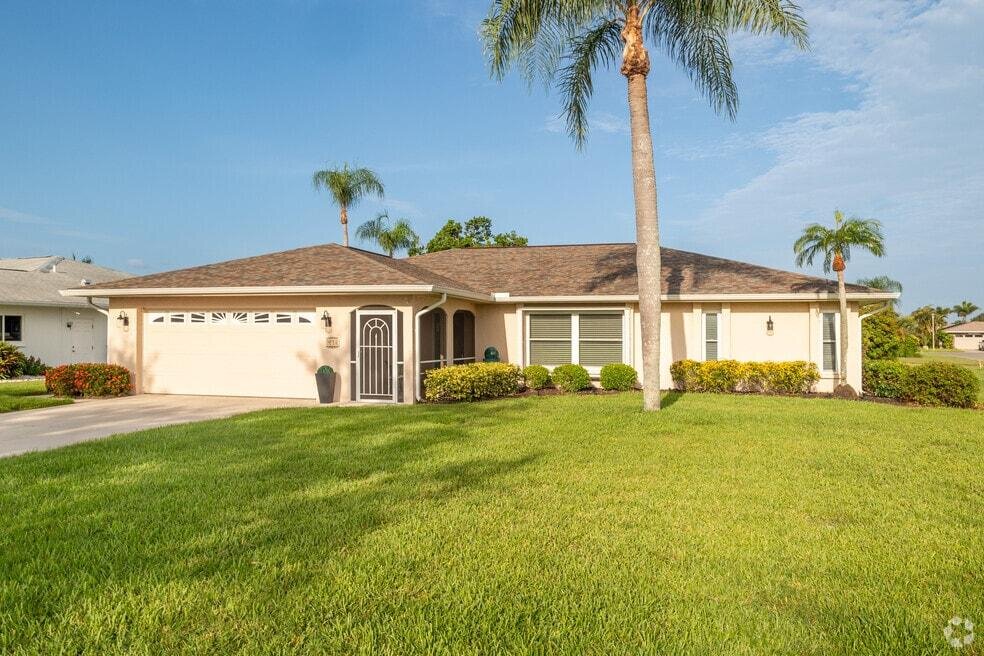
Venice has a substantial retirement population. According to U.S. Census Bureau QuickFacts, approximately 61.4% of the city’s residents are aged 65 or older.
Homeowners may eventually face increasing insurance premiums, roof replacement expenses, association assessments, property taxes, or healthcare costs.
A longtime resident of Venice Island might have considerable equity but limited income for repairs. Someone in Venice Gardens or South Venice may prefer to relocate rather than continue maintaining an older house.
Local property conditions also affect selling options. Coastal exposure, flood risk, roof condition, and insurance availability can influence a buyer’s costs and financing eligibility. The Sarasota County flood mapping resources can help you investigate your property’s flood designation.
How a Reverse Mortgage Affects Your Home Sale
The most common reverse mortgage is the Home Equity Conversion Mortgage, or HECM. This federally insured loan is generally available to qualifying homeowners aged 62 or older.
With a HECM, monthly principal and interest payments are generally not required. However, the outstanding balance can include:
- Funds received through lump-sum payments, monthly distributions, or a line of credit.
- Accumulated interest and mortgage insurance premiums.
- Applicable servicing charges.
- Property expenses advanced by the mortgage servicer.
Borrowers must continue meeting occupancy, maintenance, insurance, and property-charge obligations.
The CFPB’s reverse mortgage responsibilities guide explains these ongoing requirements.
Private or proprietary reverse mortgages may operate differently. Confirm whether your loan is a federally insured HECM before relying on the protections described in this article.
When Does a Reverse Mortgage Become Due and Payable?
You do not need to wait until your reverse mortgage becomes due before selling. However, certain events can require repayment and affect how much time you have to complete the transaction.
Common repayment triggers include:
- Selling or transferring the property without a qualifying borrower retaining ownership.
- Permanently moving out of the home.
- The death of the last surviving borrower, subject to spouse protections.
- Extended absences from the principal residence.
- Failure to meet property-tax, insurance, or other mortgage obligations.
An absence exceeding six months for nonmedical reasons can trigger repayment when no co-borrower continues living in the home.
For absences involving healthcare facilities, a different rule generally applies after more than 12 consecutive months, subject to qualifying borrower or spouse protections.
For example, permanently relocating from Venice to live with your children is different from temporarily staying in a rehabilitation facility. Do not assume that every move provides a 12-month grace period.
The CFPB’s guidance on moving out of a reverse-mortgaged home explains these distinctions.
If you receive a due-and-payable notice, ask your servicer to confirm the reason, repayment amount, and available resolution options in writing.
What If Your Reverse Mortgage Balance Exceeds Your Home’s Value?
A property can become underwater when its mortgage balance grows faster than its market value.
Federally insured HECMs provide non-recourse protection, which generally prevents borrowers or their estates from being personally responsible for a qualifying mortgage shortfall.
However, the required sale price depends partly on whether the mortgage has already become due and payable.
Understanding the HECM 95% Appraisal Rule
Federal regulations under 24 CFR § 206.125 establish different requirements for voluntary sales and sales involving due-and-payable HECMs.
| Mortgage situation | General selling requirement |
|---|---|
| Property has sufficient equity | Satisfy the outstanding mortgage balance |
| Underwater HECM not yet due and payable | Sell for at least the lesser of the loan balance or accepted appraised value |
| Underwater HECM already due and payable | A qualifying sale at 95% of the accepted appraised value may be permitted |
The 95% rule does not automatically reduce every reverse mortgage payoff by 5%.
For example, if your house has an accepted appraisal of $300,000 and a due-and-payable HECM balance of $350,000, a qualifying sale for $285,000 may satisfy the mortgage under the applicable federal requirements.
The servicer must confirm the valuation, permitted expenses, sale terms, and mortgage-release conditions.
Can You Sell Without Paying Money Out of Pocket?
Potentially, yes. A qualifying HECM sale may resolve the mortgage without requiring you or your heirs to personally cover the eligible shortfall.
However, reverse mortgage insurance does not automatically eliminate unrelated debts attached to the property.
Outstanding contractor liens, association liens, judgments, or other junior mortgages may require separate resolution. These obligations can affect the servicer’s ability to release the HECM.
Before accepting an offer, have a title company or attorney review the property and determine whether the proposed sale can close without additional funds.
How Much Equity Can You Keep After Selling?
Your home’s selling price is only the starting point. The amount you actually receive depends on the mortgage payoff, additional obligations, and negotiated transaction expenses.
The following hypothetical examples show two different outcomes.
Example 1: Selling a Venice House With Positive Equity
Suppose a homeowner in Venice Gardens decides to downsize after receiving reverse mortgage distributions for several years.
| Financial details | Amount |
|---|---|
| House sale price | $425,000 |
| Reverse mortgage payoff | −$246,000 |
| Negotiated agent commissions | −$21,250 |
| Other seller closing costs | −$7,500 |
| Outstanding property charges | −$2,250 |
| Estimated net proceeds | $148,000 |
Those funds could help pay for a smaller residence, moving expenses, or future retirement needs.
Example 2: Selling an Inherited House With Negative Equity
Suppose a family inherits an older Venice house with a due-and-payable HECM. The property requires extensive repairs, and the mortgage exceeds its appraised value.
| Financial details | Amount |
|---|---|
| Servicer-accepted appraisal | $290,000 |
| Outstanding HECM balance | $347,000 |
| 95% of appraised value | $275,500 |
| Illustrative qualifying sale price | $275,500 |
| Permitted selling expenses | −$8,500 |
| Net proceeds applied to mortgage | $267,000 |
| Estimated proceeds for heirs | $0 |
If the transaction meets the federal requirements, FHA mortgage insurance may address the qualifying $80,000 loan shortfall.
The heirs receive no equity in this example, but they may resolve the reverse mortgage without personally paying the eligible difference.
Both examples assume that the necessary mortgage releases can be obtained. Actual costs, appraisals, and settlement figures will vary.
How to Sell a House With a Reverse Mortgage in Venice: Six Steps

Step 1: Request an Updated Payoff Statement
Contact your reverse mortgage servicer and obtain a written payoff amount valid through the anticipated closing date.
Ask whether the loan remains in good standing, whether any repayment notice has been issued, and whether additional interest or servicing expenses are accumulating.
If repayment has already been triggered, request written confirmation of the relevant deadlines.
Step 2: Determine Your Home’s Market Value
Obtain a realistic valuation that reflects the property’s location, condition, and necessary repairs.
The Sarasota County Property Appraiser provides parcel information, ownership records, and assessed values.
Remember that a property’s taxable value, particularly when homestead protections have limited assessment increases, may differ considerably from its current market value.
If you need to sell under HECM negative-equity provisions, ask the servicer to arrange or identify the required appraisal.
Step 3: Review Ownership and Outstanding Liens
Ask a title company or Florida real estate attorney to review the recorded ownership and encumbrances.
HECM properties can have mortgage instruments recorded in favor of both the lender and HUD. These do not necessarily represent two independent loan balances.
The closing professional must identify which instruments require satisfaction and whether other liens need to be addressed.
Property records are available through the Sarasota County Clerk’s official records search.
Step 4: Choose the Most Suitable Selling Method
Listing with an agent may make sense when your property is market-ready and you have time to attract competitive offers.
A direct purchase may be worth considering if repairs, relocation deadlines, or continued property expenses make a conventional sale less practical.
Our guide to evaluating a fair cash offer explains how to compare purchase terms and likely net proceeds.
Step 5: Coordinate the Sale With Your Mortgage Servicer
Once you receive an acceptable offer, involve your closing professional and servicer.
For an underwater HECM, obtain confirmation of the required appraisal, minimum acceptable purchase price, permitted selling expenses, and mortgage-satisfaction procedure.
If additional time is necessary, request an extension rather than assuming that signing a purchase agreement automatically postpones foreclosure.
Step 6: Complete Closing and Confirm Mortgage Satisfaction
The settlement agent distributes the purchase funds according to the approved closing statement.
After the mortgage and other necessary obligations are addressed, remaining proceeds are distributed to the legally entitled owner or estate.
Retain copies of the settlement statement, payoff confirmation, and recorded mortgage satisfaction documents.
Documents Needed to Sell a House With a Reverse Mortgage
Having the following paperwork available can help reduce unnecessary delays:
- Recent reverse mortgage statement and updated payoff quote.
- Any due-and-payable notices or extension correspondence.
- Property deed and ownership documentation.
- Property-tax and homeowners insurance information.
- Association balances and outstanding lien records, if applicable.
- Death certificate and probate or trust documents for inherited properties.
Do not send sensitive mortgage records to an unverified buyer. Provide financial and ownership documentation through appropriate secure channels when needed by the servicer, attorney, or closing company.
Selling an Inherited Venice House With a Reverse Mortgage
First, establish whether another borrower or a protected surviving spouse remains entitled to occupy the property.
If no such protection applies, the heirs or estate representative will generally need to arrange repayment, sell the property, or pursue another permitted resolution.
The CFPB’s guidance for heirs of reverse mortgage borrowers explains the available options.
Florida Probate and Ownership Requirements
Being named as a beneficiary does not necessarily give you immediate authority to sign a purchase agreement or transfer the property.
Under Florida Statutes § 733.613, a personal representative’s authority to sell estate real estate can depend on the terms of the will and whether court authorization is required.
Florida homestead protections, trusts, joint ownership, and surviving-spouse rights may also affect who holds title and who must participate in the sale.
The Sarasota County Clerk’s probate department provides local estate-administration information.
You can also explore our inherited and probate property selling resource for additional guidance.
Begin addressing the ownership questions early because opening probate does not automatically suspend reverse mortgage deadlines.
Can a Surviving Spouse Stay in the House?
A surviving co-borrower can generally remain in the home while continuing to meet the reverse mortgage obligations.
A spouse who was not a borrower may qualify for repayment deferral under HUD’s Eligible Non-Borrowing Spouse protections.
Eligibility depends on several factors, including the FHA case assignment date, marital circumstances, principal-residence status, and compliance with loan conditions.
Protected non-borrowing spouses do not receive additional reverse mortgage distributions.
Before making plans to sell, review the CFPB’s surviving-spouse guidance and obtain confirmation of the spouse’s status from the mortgage servicer.
What If You Want to Keep the House Instead?
Selling is not the only possible solution.
Borrowers or families may consider repaying the mortgage with available funds, obtaining replacement financing if eligible, correcting a curable mortgage default, or using applicable surviving-spouse protections.
Heirs should request a written payoff determination before attempting to retain an underwater HECM property.
An independent HUD-approved housing counselor can help evaluate alternatives.
If retaining the property is affordable and consistent with your long-term housing needs, selling may not be necessary.
How Long Do Heirs Have to Sell a Reverse-Mortgaged House?
Federal HECM regulations generally provide a 30-day period following the applicable due-and-payable notice to pursue a permitted resolution.
Additional time may be available when heirs are actively working toward a sale or refinancing.
Federal rules generally require the mortgagee to initiate foreclosure within six months of the applicable due date, unless an authorized extension or legal exception applies.
This is not a guaranteed six-month selling period in every situation.
Contact the servicer promptly, document your progress, and request any necessary extensions before deadlines expire.
If legal proceedings have begun, consult a Florida attorney. Our guide to the Florida foreclosure process provides additional context.
Listing With an Agent vs. Selling Your Venice House for Cash
A reverse mortgage does not require you to sell to a cash buyer. The best choice depends on the property’s condition, remaining equity, and the time available.
| Selling consideration | Traditional listing | Direct cash sale |
|---|---|---|
| Potential price | May achieve a higher market price | Based on condition and purchase terms |
| Repairs | May be necessary for certain buyers | As-is purchase may be available |
| Agent commissions | Negotiable | None on our direct purchase |
| Buyer financing | May involve lender approval | No buyer mortgage financing |
| Reverse mortgage requirements | Still apply | Still apply |
| Closing timeline | Depends on the transaction | Flexible, subject to closing requirements |
An older roof, for example, could create financing or insurance difficulties for a traditional buyer. Our article about selling a house with an old or damaged roof in Venice explains why replacing it is not always the most economical choice.
A direct purchase may reduce preparation expenses, but it cannot override mortgage repayment rules or eliminate title problems.
Compare both approaches using the expected net proceeds rather than the purchase price alone. Our cash buyer versus agent comparison can help you evaluate the trade-offs.
Mistakes to Avoid When Selling With a Reverse Mortgage
Avoid decisions that could reduce your remaining equity or complicate closing:
- Relying on an outdated mortgage statement.
- Assuming every reverse mortgage qualifies for the 95% rule.
- Ignoring repayment notices during probate.
- Cancelling required insurance before closing.
- Spending heavily on repairs without comparing as-is offers.
- Signing agreements before confirming legal authority to sell.
Be particularly cautious of anyone promising to eliminate your mortgage debt without coordinating with the servicer.
How Florida Home Buyers Helps Venice Homeowners
Florida Home Buyers is a Sarasota-based, family-owned home-buying company serving Sarasota and Manatee counties since 2002.
If your Venice house has a reverse mortgage, you can discuss its condition, outstanding mortgage, and preferred selling timeline with our team.
We evaluate eligible properties for an as-is purchase and provide a written offer for your consideration. There are no agent commissions on our direct purchase and no obligation to accept.
A local closing professional can coordinate the necessary mortgage payoff and title requirements.
Learn more about how our home-buying process works or explore our Venice home-buying services.
Frequently Asked Questions
Can I sell my house in Venice, FL, if I have a reverse mortgage?
Yes. You can sell your house with a reverse mortgage, provided the outstanding loan and other required financial obligations are properly resolved during closing.
Do I keep my remaining equity when selling a house with a reverse mortgage?
Yes. Any remaining proceeds after paying the reverse mortgage, other liens, and selling expenses generally belong to the homeowner or legally entitled estate.
Can I sell an inherited house with a reverse mortgage in Florida?
Yes. You must establish legal authority to sell the property and satisfy the mortgage servicer’s requirements. Probate or additional ownership documentation may be necessary.
What happens if my reverse mortgage balance exceeds my home’s value?
Federal HECM non-recourse protections may allow you to sell without personally paying the qualifying mortgage shortfall, provided the transaction meets applicable requirements.
What is the 95% rule when selling a house with a reverse mortgage?
When a qualifying HECM becomes due and payable, selling for at least 95% of the accepted appraised value may satisfy the mortgage if the outstanding debt exceeds the property’s value.
How long do heirs have to sell a house with a reverse mortgage?
Heirs generally have 30 days after receiving a due-and-payable notice to resolve the debt. Extensions may be available through the mortgage servicer to complete a sale or arrange financing.
Can I sell my house after moving into assisted living?
Yes. Contact your reverse mortgage servicer promptly to confirm repayment deadlines, occupancy requirements, and any available surviving-spouse protections.
Can a surviving spouse stay in a house with a reverse mortgage?
Yes. Surviving co-borrowers and eligible non-borrowing spouses may continue living in the property if they meet applicable mortgage and HUD requirements.
Can I sell a house with a reverse mortgage in Venice without making repairs?
Yes, an as-is sale may be possible without completing repairs, provided the purchase terms satisfy applicable mortgage, title, and closing requirements.
Do cash home buyers in Venice purchase houses with reverse mortgages?
Yes. Florida Home Buyers can evaluate eligible reverse-mortgaged properties for a direct as-is purchase, subject to mortgage satisfaction, title clearance, and agreed closing terms.
Ready to Sell Your Venice House With a Reverse Mortgage?
Before committing to expensive renovations or accepting an offer, confirm your mortgage balance and compare your available options.
If a direct as-is sale fits your circumstances, Florida Home Buyers can discuss a possible purchase of your Venice property.
Call (941) 927-0040 or request a no-obligation cash offer to discuss your next steps.
Disclaimer: This article is for general educational purposes and does not constitute legal, financial, tax, or mortgage advice. Reverse mortgage requirements vary by loan type and individual circumstances. Consult your mortgage servicer, a qualified Florida attorney, or a HUD-approved housing counselor. Financial examples are hypothetical.