
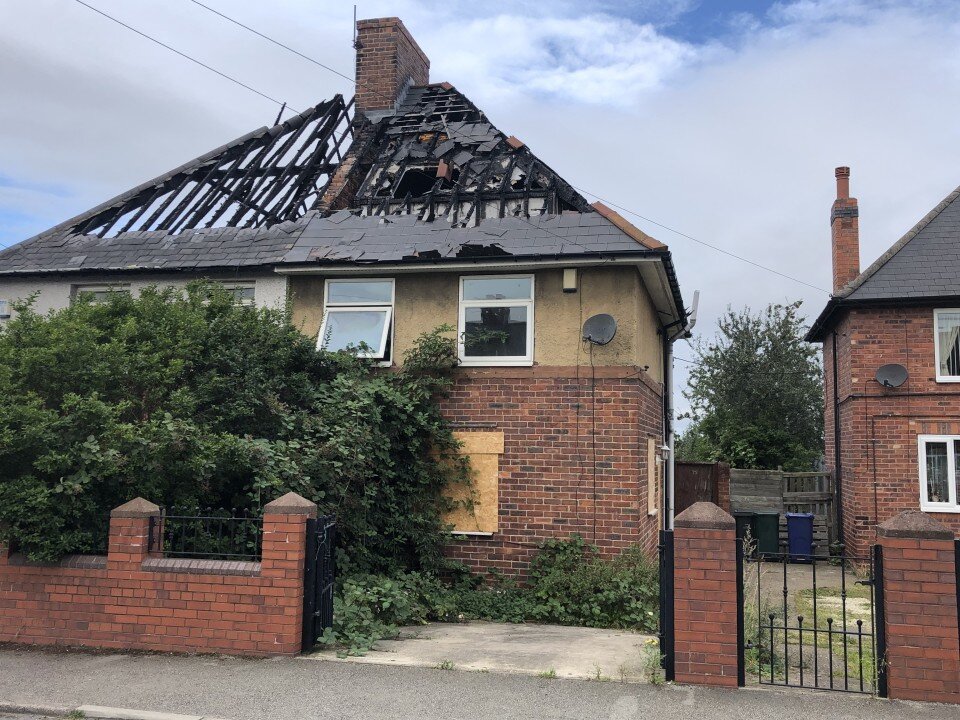
A house fire can leave you with damage far beyond the burned rooms. Smoke may spread through ductwork, firefighting water can soak walls, and electricity may be unsafe to restore. Yet mortgage payments, taxes, and insurance questions remain.
If you need to sell a fire-damaged house in Sarasota, FL, a complete renovation is not necessarily required before you seek a buyer. You can investigate repairs, market the property as-is, or request a direct offer from someone prepared to evaluate the damage. The right choice depends on the structure’s condition, local building requirements, insurance claim, and actual proceeds after expenses.
This guide addresses fire, smoke, soot, and firefighting-water damage, Sarasota-specific records, Florida rules, and realistic selling choices.
City of Sarasota vs. Sarasota County: Who Handles Fire-Damage Permits?
A Sarasota mailing address does not always mean the home is inside City of Sarasota limits. Some addresses are in unincorporated Sarasota County, where county building officials handle permits and inspections. Confirm the property jurisdiction before hiring a contractor or asking for a permit history.
For homes inside the City, use the City of Sarasota Building & Permitting Division and its online permitting portal. For unincorporated properties, start with Sarasota County Building and its online permitting service.
Emergency fire response is a separate matter. Sarasota County Emergency Services provides fire-rescue services to the area, including the City. If you need an incident report, ask the responsible agency how to request it; the County maintains a public records request service.
What to Do Before Entering or Cleaning a Fire-Damaged House
Do not enter until fire or other authorized officials say the structure is safe. A floor or ceiling can be weakened without looking severely burned. Wiring, gas lines, and appliances may also be unsafe. If an official has posted a restriction on occupancy, do not disregard it because you want to photograph the house for buyers.
Use the Red Cross’ home-fire recovery guidance and U.S. Fire Administration resources for safe recovery and documentation.
Once authorized to access the home, record the damage before major cleanup. Photograph each affected room, the roof and exterior, smoke staining, damaged equipment, and water left by fire suppression. Save receipts for emergency boarding, tarping, or other protective work. If the insurer needs to inspect materials, ask what may be removed and how to document it first.
Avoid switching utilities back on yourself. Use qualified professionals to evaluate electrical, HVAC, plumbing, and structural systems. Do not disturb suspected asbestos-containing materials, older coatings, or heavily contaminated debris without appropriate guidance. Professional evaluation is especially important where soot or wastewater entered concealed spaces.
How Smoke, Soot, and Firefighting Water Affect a House
Estimates should distinguish the damage sources, not simply price new paint.
Direct flame and heat damage may affect framing, roof members, insulation, windows, and electrical components. Charred or heat-exposed structural elements can require an engineer’s assessment. Smoke and soot may spread well beyond the room where the fire started, affecting ductwork, cabinets, porous finishes, and personal belongings. Odor reduction alone does not prove that contamination has been appropriately addressed.
Water used to extinguish the fire may collect under flooring, behind walls, or in insulation. If that moisture remains, further deterioration or mold can develop. Firefighting-water damage is not the same as a separate flood event for insurance purposes; the source of the water matters.
Ask restoration professionals which materials are salvageable and why. The Red Cross offers post-fire cleanup guidance, but major structural and contamination work needs qualified evaluation.
Can You Sell a Fire-Damaged House As-Is in Sarasota?
Yes, generally. An as-is contract can allow a buyer to accept an eligible property in its existing condition, subject to the agreement and applicable legal requirements. That does not mean an unsafe building becomes habitable, permits are unnecessary, or all buyers can obtain financing.
A conventional buyer may need acceptable property-condition and insurance evaluations before a lender will fund the purchase. A renovation-oriented or cash buyer may be better equipped to assess a damaged house, but still needs to investigate repair scope, title, and local restrictions.
Disclose known fire damage and unresolved issues. The existing as-is selling guide covers broader repair problems.
What Must You Disclose About a Previous House Fire?
Florida’s seller-disclosure rule is broader than whether the fire damage is visible during a walkthrough. In Johnson v. Davis, the Florida Supreme Court recognized a duty to disclose known facts materially affecting a property’s value when those facts are not readily observable and are not known to the buyer.
For a fire-affected house, relevant known conditions may include structural deterioration, concealed smoke contamination, water damage, prior repairs, and unresolved permit issues. Do not describe a property as fully restored merely because paint or flooring has been replaced. Keep invoices, inspection records, and any applicable clearance documents available.
“As-is” does not mean “without disclosure.” If you are uncertain about a specific fact, consult a Florida real estate attorney. Accurate written disclosures are usually less costly than a later dispute over an undisclosed defect.
Permits and Unsafe-Building Notices After a Sarasota House Fire
The repair process depends on jurisdiction and scope. A house with minor cosmetic damage is different from one needing new wiring, structural framing, roof reconstruction, or major mechanical work.
Within city limits, the City’s building department reviews permits and inspections. Its guidance identifies structural, mechanical, electrical, plumbing, and fire-system work as permit-sensitive activities. County properties use the Sarasota County Building Division. Do not assume an emergency cleanup or minor-work exemption authorizes all subsequent reconstruction.
Ask the relevant department whether a building-safety notice or occupancy restriction exists, what permits the proposed work needs, whether previous permits remain open, and what inspections must be passed before occupancy. Repairs completed without required approval can create problems when a buyer’s title company or insurer reviews the property.
For major losses, ask whether demolition or partial demolition would require a separate approval, a debris-removal plan, or utility disconnections. A home that cannot be occupied may still be transferable, but the permitted use of the structure and the buyer’s proposed work should be established before the parties set a closing date.
A buyer agreeing to repair after closing cannot override a governmental order. Confirm which obligations must be resolved before transfer or occupancy.
Can a Fire Trigger FEMA’s 50% Substantial-Damage Rule?
It can, if the house is in an applicable special flood hazard area. Sarasota’s floodplain rules can consider substantial damage caused by fire, not only flooding. Where the applicable cost to restore the building reaches at least 50% of its pre-damage building value, compliance with current floodplain construction requirements may be necessary.
It does not apply universally. Check the flood designation and read the Property Appraiser’s FEMA 50% explanation; the building or floodplain official makes the applicable determination.
How Homeowners Insurance Affects a Fire-Damaged Sale
Homeowners policies commonly cover certain direct fire and smoke losses, but coverage is controlled by your actual contract: policy exclusions, limits, deductibles, conditions, and the cause of the loss matter. The Florida Department of Financial Services’ homeowners insurance overview explains dwelling, personal property, additional living expense, and replacement-cost versus actual-cash-value concepts.
Notify the insurer promptly. Keep photos, estimates, inventories, receipts, and adjuster correspondence together. The state’s property-protection guidance addresses temporary repairs.
Under Florida Statutes Section 627.70132, notice of a new or reopened property claim generally must be given within one year after the loss; notice of a supplemental claim generally has an 18-month limit. You must also follow your own policy’s reporting conditions. Those statutory windows are not reasons to delay notifying the insurer.
What If the Insurance Claim Is Still Open?
You may be able to sell, but do not assume an unpaid claim or its benefits automatically transfers with the property. Ask the insurer who will be entitled to any later payment, how the mortgage lender’s interest affects checks, and whether the proposed sale changes repair-related payment conditions.
Replacement-cost provisions may treat depreciation differently from actual-cash-value coverage, sometimes depending on whether repairs are completed. Never count an expected insurance recovery as sale proceeds until the insurer and closing professional have clarified the arrangement. Florida also restricts certain post-loss assignments of benefits under newer policies; review the state’s AOB consumer information.
For disputes, consider legal advice or a licensed public adjuster. Review Florida’s public-adjuster guidance before signing a fee agreement.
What If You Have No Insurance or the Claim Is Denied?
A sale remains possible. Compare out-of-pocket repair costs with expected proceeds. If coverage was denied, request written reasons and review available policy options.
If the property is unsafe or the building has extensive damage, the buyer may price demolition, engineering, and code compliance into its offer. No-insurance status itself does not determine the value of the underlying land or what another purchaser might pay.
Three Ways to Sell a Fire-Damaged Home in Sarasota
Option 1: Restore the House Before Listing
Restoration may make the property attractive to a broader group of buyers. A complete project might include debris removal, structural repair, smoke remediation, water-damage work, new systems, permits, final inspections, and documented completion.
A higher retail price helps only if it exceeds repair and carrying expenses. Restoration can expose hidden damage. Get written scopes and verify floodplain or insurance requirements before authorizing a rebuild.
Option 2: List the Property As-Is With an Agent
An agent can market to renovation buyers. Share reports and use comparables involving genuinely damaged properties, not only unaffected neighboring houses.
Buyers may request investigations, credits, or extensions. Mortgage financing can be difficult without safe occupancy or working utilities. Compare net proceeds after costs and time on market.
Option 3: Request a Direct As-Is Offer
A direct buyer may be prepared to evaluate an eligible Sarasota home in its current condition and plan substantial repairs after closing, where permitted. This can reduce seller-managed construction and eliminate some mortgage-financing contingencies.
However, the offer will reflect the buyer’s expected restoration work, holding costs, risks, and margin. It may be below a renovated home’s potential sale price. Any outstanding insurance, municipal, or title issues still need attention. Review how Florida Home Buyers evaluates properties and its seller options, then compare a written offer with your other realistic alternatives.
Sarasota Example: Repair, List As-Is, or Sell Directly?
Imagine a Sarasota house with a damaged kitchen, smoke contamination in adjacent rooms, and firefighting-water damage. After a professional assessment, the owner receives a major restoration estimate. They are also carrying mortgage and insurance expenses while the house sits empty.
| Hypothetical amounts | Restore, then list | List as-is | Direct purchase |
|---|---|---|---|
| Expected sale price | $390,000 | $305,000 | $280,000 |
| Seller-funded restoration | $105,000 | $0 | $0 |
| Selling and holding expenses | $31,000 | $25,000 | $4,500 |
| Illustrative proceeds before mortgage debt | $254,000 | $280,000 | $275,500 |
Hypothetical illustration only. These figures are not Sarasota market averages, actual contractor estimates, or a Florida Home Buyers offer. Selling and holding expenses depend on the contract, and the direct-purchase amount is not a claimed company fee. Mortgage payoffs, taxes, liens, insurance recoveries, unexpected repairs, and other possible obligations are excluded.
In this example, listing as-is produces the highest estimated proceeds at $280,000, followed by a direct purchase at $275,500. Restoring the property produces the highest sale price but lower net proceeds because of the $105,000 renovation expense. Actual repair estimates, buyer offers, and insurance recoveries could change the comparison.
Compare realistic net proceeds and the cost of completing the work—not just the expected sale price.
What Buyers May Discover During a Fire-Damage Inspection
Buyers may request structural, electrical, soot, moisture, or HVAC assessments and permit records—even when charring looks limited.
A seller credit cannot necessarily satisfy lender standards or an official unsafe-structure notice. Determine who requires repairs and whether alternatives are acceptable.
To evaluate a direct offer, read the site’s fair-offer guide and cash-closing timeline explanation. Speed alone does not establish that a transaction can close.
Can You Get Property-Tax Relief After a House Fire in Sarasota?
This is an often-overlooked local issue. The Sarasota County Property Appraiser’s damage-reporting page specifically includes fire among calamities that may affect property valuation. Owners should report significant damage and provide supporting records.
Under Florida Statutes Section 197.319, qualifying residential properties rendered uninhabitable for at least 30 days by a catastrophic event may be eligible for a partial property-tax refund for the year of the event. Applications are generally due by March 1 of the following year. The Sarasota County Property Appraiser advises applicants to wait until the property is repaired or January 1 arrives, whichever comes first, before submitting Form DR-465. Confirm filing requirements, supporting documentation, and any sale-related questions with the Property Appraiser.
A damage report by itself is not the refund application. Nor does a pending refund eliminate the obligation to pay property taxes. Keep photographs, official notices, contractor statements, and insurance records if you believe you may qualify.
What If the Home Is Vacant, Inherited, or Has a Mortgage?
Secure vacant properties against weather and unauthorized entry. Check insurance vacancy rules and honor any official restriction on access.
For inherited properties, confirm sale authority, estate documents, and debts. See the probate guide.
A mortgage does not disappear after a fire. Request a current payoff and ask your lender how it will handle insurance payments or repairs. If the sale will not cover existing debt or recorded obligations, obtain professional advice before committing to a closing date.
Checklist Before Selling a Fire-Damaged House in Sarasota
- Safety: Confirm entry and occupancy restrictions before scheduling access.
- Evidence: Collect photographs, incident records, mitigation receipts, and contractor assessments.
- Insurance: Confirm coverage, claim deadlines, payment status, and mortgagee requirements.
- Local approvals: Verify city or county jurisdiction, open permits, and required inspections.
- Financials: Obtain payoff statements, realistic restoration bids, and as-is sale estimates.
- Contract: Put inspection rights, repair responsibility, remaining claims, and closing conditions in writing.
The Florida Home Buyers FAQ can help with general direct-sale questions, but property-specific legal or claim issues should be handled by qualified professionals.
How Florida Home Buyers May Help You Explore an As-Is Sale
Florida Home Buyers works with homeowners in the Sarasota area. If you do not want to finance or coordinate fire restoration, you can share the property’s condition and any available insurance, inspection, or permit information and ask whether it meets the company’s purchase criteria.
If the property qualifies, the company can discuss a written offer and its terms. It should be compared with a realistic repaired sale and as-is listing, including every obligation you would pay before closing. There is no obligation to accept an offer simply because you request one.
You can learn more through Our Company and homeowner testimonials before deciding whether to proceed.
Frequently Asked Questions About Selling a Fire-Damaged House in Sarasota, FL
Can I sell a fire-damaged house in Sarasota without making repairs?
Yes, generally. A willing buyer may accept the home as-is, but legal disclosure requirements, title matters, unsafe-building restrictions, and contract conditions still apply.
Do I have to disclose a previous house fire in Florida?
Disclose known fire-related defects that materially affect value and are not readily observable or known to the buyer. Provide available repair and inspection documentation rather than assuming an as-is clause removes disclosure duties.
Can I sell while my fire insurance claim is open?
Potentially. Ask the insurer, lender, and closing professional to establish who has rights to unpaid proceeds and whether selling changes any policy or repair requirements.
Will a cash buyer purchase a house with smoke or soot damage?
Some buyers consider such properties. The buyer will assess contamination, structural condition, restoration costs, local restrictions, and title before deciding what to offer.
Do I need permits to repair fire damage in Sarasota?
Many structural, electrical, mechanical, plumbing, and fire-system repairs require permits. Check whether the property is inside city limits or unincorporated Sarasota County and confirm the required approvals.
Can a fire trigger the FEMA 50% rule in Sarasota?
Yes, for applicable buildings in special flood hazard areas. Substantial damage can result from fire as well as flooding. The relevant local authority determines whether floodplain compliance is required.
Does a fire-damaged home qualify for property-tax relief?
Possibly. Under Florida law, qualifying residential improvements uninhabitable for at least 30 days may be eligible for a partial refund. Application deadlines and documentation requirements apply.
Can I sell a fire-damaged Sarasota house with a mortgage?
Yes, if the mortgage and other closing obligations can be resolved. Coordinate with your lender regarding any insurance proceeds and request a payoff before accepting a final sale plan.
How quickly can I sell a fire-damaged house in Sarasota?
There is no guaranteed timeline. Safety restrictions, inspections, title work, insurance claims, financing, and unresolved permits can affect closing even when a buyer pays cash.
Compare Your Options Before Paying for Fire Restoration
You can explore selling before rebuilding. Establish safety, the scope of fire and smoke damage, and unresolved permits or insurance issues. Compare restoration costs against realistic as-is proceeds.
If a direct sale is worth exploring, contact Florida Home Buyers at (941) 927-0040 or share details about your property. You can discuss the situation, request information, and evaluate any proposal without an obligation to accept.
Disclaimer: This article provides general information, not legal, insurance, financial, environmental, or construction advice. Fire-damage conditions, coverage, permit requirements, and transaction obligations vary. Confirm property-specific details with the applicable local authority and qualified professionals.